Courses
MBA
MCA
BBA
BCA
B.Com
Certifications
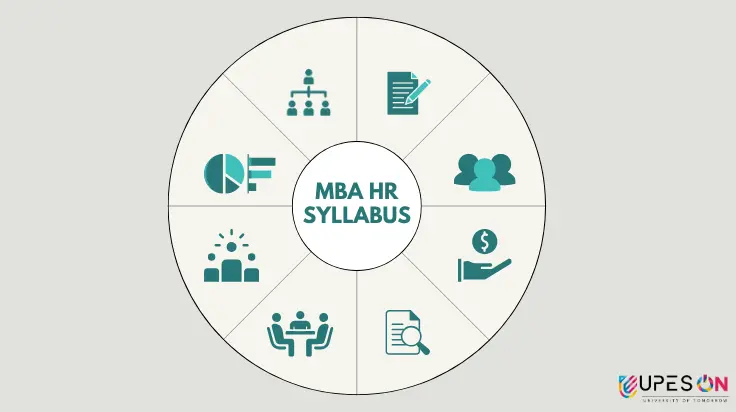
Human Resources (HR) is the backbone of any organization, ensuring a skilled workforce that drives success. An MBA in HR equips you with the knowledge and expertise to thrive in this dynamic field. This guide delves into the MBA in HR syllabus, career opportunities, and future prospects, empowering you to make an informed decision about your education.
1. What is MBA HR Management?
MBA in HR Management is a postgraduate degree program that helps you get advanced knowledge and skills in the field of Human Resources (HR). The program combines core HR functions like recruitment, performance management, and compensation & benefits with a strong foundation in business principles. Top HR professionals become a strategic business partner, influencing organizational success through effective HR practices.
2. What are the benefits of pursuing an MBA in HR Management?
There are several advantages to getting an MBA in HR Management:
3. What are the typical core courses in a MBA HR Management program?
All MBA in HR programs include basic foundational learnings like HR principles and practices along with one specialized elective. Here are some common examples:
4. What are the typical elective courses offered in a MBA HR Management program?
In addition to common subjects, HR program offer a range of elective courses allowing you to tailor your interests and career goals. Here are some examples:
5. What are the career options for MBA HR Management graduates?
Here are some popular career options post MBA:
1. What are the prerequisites for the program?
To be eligible for a MBA HR degree, you need a Bachelor's degree in any discipline. Your work experience might come in handy for some programs. Test scores like GMAT or GRE might be needed. Keep checking the specific requirements of the programs you're considering.
2. What is the duration of the program?
An MBA in HR degree is typically a two-year program, divided into 4 semesters. Some programs might offer accelerated options (12-18 months) or part-time formats that extend the duration.
3. What is the teaching style used in the program?
The teaching style can vary depending on the university. Here are some common approaches:
4. Is there an emphasis on digital HR in the program?
The focus on digital HR (also known as HR technology) is growing in many MBA HR programs. Here's what you might encounter:
The emphasis on digital HR can vary between programs. If it's crucial for your career goals, research the curriculum or contact the program directly to understand their approach.
5. What are the internship opportunities available?
Many MBA programs offer career services to assist students in finding internship opportunities. Here are some resources and types of internships you might encounter:
An MBA in HR goes beyond just HR practices. It provides a well-rounded business education, along with in-depth HR specialization. Here's what you gain:
These subjects provide a strong foundation in business principles:
These courses delve into the intricacies of HR management:
Here's a glimpse into the typical subject distribution across semesters (course names may vary):

Further refine your expertise by pursuing specializations within HR, such as:
Earning relevant HR certifications can enhance your resume and demonstrate your commitment to the profession. Here are some well-respected certifications to consider:
MBA HR students have a wide range of internship opportunities open to them, allowing them to gain valuable hands-on experience and explore different career paths within the HR field. Here are some examples of common internships for MBA HR students:
Talent Acquisition: Assist with tasks like resume screening, interview coordination, and candidate onboarding.
Learning & Development: Assist with developing e-learning modules or conducting training needs assessments.
University Career Services: Leverage your university's career services department for internship postings and guidance.
An MBA in HR opens doors to a wide range of exciting careers. Here are some popular options:
The scope within HR is vast, allowing you to specialize in specific areas based on your interests and skills. Here are some popular specializations:
The salary for MBA HR graduates varies depending on factors like location, experience, industry, and company size. However, here's a general idea:



Choose the best online MBA programs at UPES Online. Learn about specializations, career scope, & why professionals choose UPES for flexible learning.
Read MoreOct 15, 2025 I 6 mins
General MBA vs specialized MBA compared on metrics like scope, ROI, salary & career growth in India. Understand the path & choose wisely.
Read MoreMay 3, 2026 I 8 mins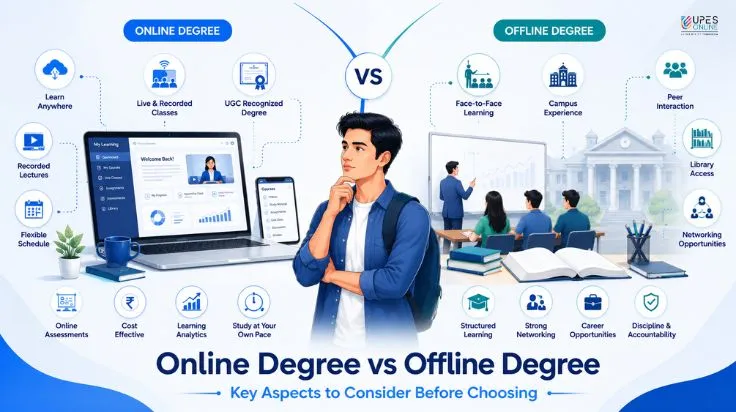
Compare online degree vs offline degree based on flexibility, costs, career opportunities, recognition, & learning experience to choose the right program.
Read MoreJul 10, 2026 I 9 mins
Explore online B.Com scope in 2026, including benefits, career options, salaries, industries, higher studies and whether an online B.Com degree is worth it.
Read MoreJul 31, 2026 I 11 mins
Explore a detailed guide on MBA for working professionals including eligibility, fees, online MBA options, top specializations, career scope & how to apply.
Read MoreAug 15, 2026 I 13 mins
Find out whether an Online MCA is worth it in 2026. Explore eligibility, fees, specializations, colleges, career scope, salaries and UGC validity.
Read MoreAug 29, 2026 I 11 mins
Find out if online MBA for engineers is a good choice; explore top specializations and career scope.
Read MoreSep 8, 2026 I 11 mins
MBA Finance Syllabus covers everything from accounting to modelling to acquisitions. Earn a degree and become a Finance Expert.
Read Blog
Discover complete MBA Business Analytics syllabus! Unlock career opportunities with in-depth study resources, job demand insights & future-ready skills.
Read Blog
Craft killer content & land your dream job! Conquer interviews with 50 must-know content writer questions (basic & advanced).
Read Blog
Dive deep into the world of startups: Types, models, funding secrets, who invests & what's trending. Learns the basics of entrepreneurship.
Read BlogMBA Finance Syllabus covers everything from accounting to modelling to acquisitions. Earn a degree and become a Finance Expert.
Read BlogDiscover complete MBA Business Analytics syllabus! Unlock career opportunities with in-depth study resources, job demand insights & future-ready skills.
Read BlogCraft killer content & land your dream job! Conquer interviews with 50 must-know content writer questions (basic & advanced).
Read BlogDive deep into the world of startups: Types, models, funding secrets, who invests & what's trending. Learns the basics of entrepreneurship.
Read Blog