 Call Now
 Programs
  About
About 

CFO Qualifications & Skills Required to Reach the Top Level
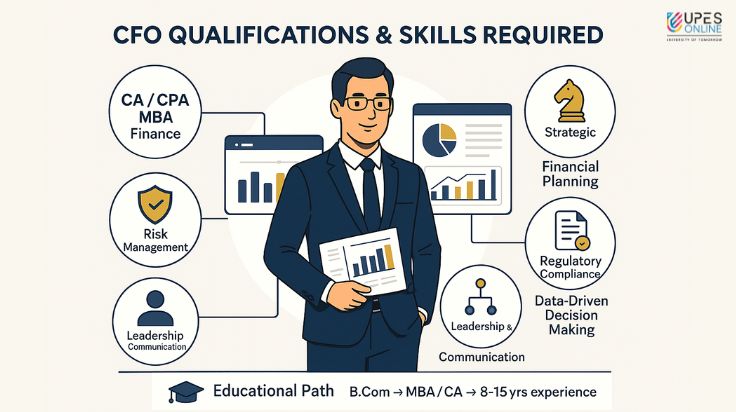
Table of Contents:
- What qualifications does a CFO need?
- Academic Qualifications
- Financial Leadership skills
- Core CFO Skills
- Additional Attributes that set CFOs apart
- How to Prepare for a CFO Role
- Thoughts
A Chief Financial Officer (CFO) isn’t just a number-cruncher—they’re a strategist, visionary, and key decision-maker steering the financial health of an organization. In today's fast-paced, data-driven business environment, the CFO's role is more powerful than ever. But what does it take to sit at the top of the financial ladder?
In this blog, we explore the essential CFO qualifications and skills that define the modern-day finance leader—and how you can prepare for the climb.
What Qualifications Does a CFO Need?
Let’s start with the basics. If you're wondering what qualifications does a CFO need, the answer varies by industry, company size, and country—but some credentials are universally respected.
Academic Qualifications:
- Bachelor’s Degree in Accounting, Finance, Economics, or Business Administration is the starting point.
- Postgraduate Degrees like an MBA (Finance) or Master’s in Accounting/Finance can significantly boost your prospects.
- Professional Certifications such as:
- Chartered Accountant (CA)
- Certified Public Accountant (CPA)
- Chartered Financial Analyst (CFA)
- Cost and Management Accountant (CMA)
- ACCA (Association of Chartered Certified Accountants)
Tip: In India, a CA qualification is highly valued. Globally, a CPA or CFA opens more doors.
These CFO qualifications demonstrate not only technical expertise but also the discipline and strategic thinking needed to guide financial operations.
CFO Skills That Define Financial Leadership
While degrees and certifications get your foot in the door, CFO skills are what keep you moving up the ladder. Modern CFOs are expected to be far more than financial controllers—they're business enablers.
Core CFO Skills Include:
1. Financial Acumen
You must have in-depth knowledge of accounting principles, budgeting, financial planning, taxation, compliance, and risk management. A strong grasp of regulatory frameworks (GAAP, IFRS) is non-negotiable.
2. Strategic Thinking
Modern CFOs help shape the company’s growth. You must be able to align financial planning with long-term business objectives and identify investment or divestment opportunities.
3. Data Analytics & Tech-Savviness
With digital finance transformation, CFOs need to understand financial analytics tools, ERP systems (like SAP or Oracle), and emerging tech such as AI and automation in finance.
4. Leadership & Communication
CFOs regularly communicate with CEOs, board members, and investors. The ability to present complex financial data in a clear, persuasive way is a major asset.
5. Crisis Management
From economic downturns to cash flow crises, CFOs must remain calm under pressure, make quick decisions, and implement sustainable solutions.
Pro Tip: The most successful CFOs blend financial expertise with emotional intelligence and the ability to influence non-finance stakeholders.
Additional Attributes That Set CFOs Apart
Apart from CFO qualifications and skills, top finance leaders share certain personal qualities:
- Ethical Judgment: Integrity is the cornerstone of any finance role.
- Business Insight: Understanding the company’s products, markets, and customers.
- Global Perspective: Especially critical in MNCs with cross-border operations.
- Adaptability: The ability to navigate change, whether it’s digital transformation or evolving regulations.
How to Prepare for a CFO Role
Here’s a step-by-step roadmap to help you build your CFO profile:
- Start with a solid foundation: Earn your bachelor’s degree and consider a CA, CPA, or CFA qualification.
- Gain 10–15 years of finance experience: Work across FP&A, auditing, compliance, investor relations, or financial operations.
- Pursue leadership training or an executive MBA: Strategic leadership training can make a real difference.
- Build your digital and analytical skills: Get comfortable with financial modeling tools, dashboards, and analytics.
- Seek cross-functional exposure: Understand marketing, HR, and operations to become a holistic business partner.
Final Thoughts
Becoming a CFO isn’t just about mastering spreadsheets—it's about mastering strategic influence. With the right CFO qualifications and skills, you can position yourself as a key driver of business growth and innovation.
So whether you're a finance manager looking to move up, or a student aiming high, start investing today in the capabilities that tomorrow’s CFOs are expected to have. Ready to take the next step in your finance career?
Start by strengthening your foundation in finance, strategy, and analytics—and keep building toward the boardroom.
UPES Online Admission Enquiry
Recommended Courses




Latest Blogs
What Are the Best Online MBA Programs at UPES Online?
Choose the best online MBA programs at UPES Online. Learn about specializations, career scope, & why professionals choose UPES for flexible learning.
Read MoreOct 15, 2025 I 6 mins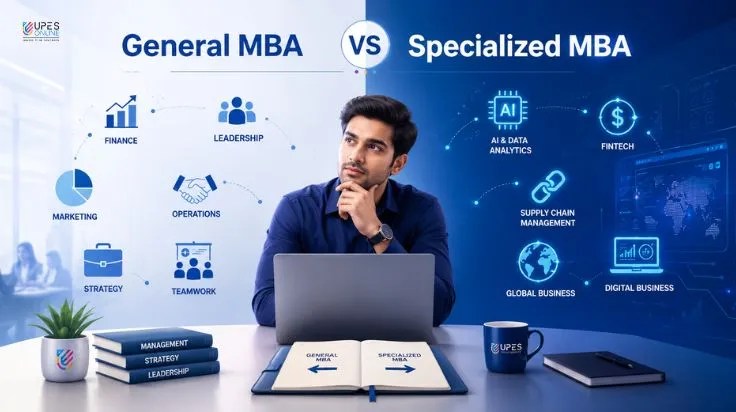
General MBA vs Specialized MBA: How to Choose Your Path in 2026?
General MBA vs specialized MBA compared on metrics like scope, ROI, salary & career growth in India. Understand the path & choose wisely.
Read MoreMay 3, 2026 I 8 mins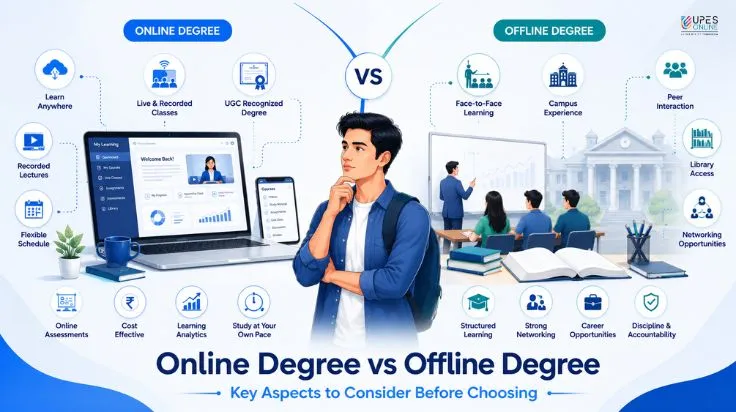
Online Degree vs Offline Degree: Key Aspects to Consider Before Choosing
Compare online degree vs offline degree based on flexibility, costs, career opportunities, recognition, & learning experience to choose the right program.
Read MoreJul 10, 2026 I 9 mins
Online B.Com Scope in 2026: Benefits, Careers, Salaries & Is It Worth It?
Explore online B.Com scope in 2026, including benefits, career options, salaries, industries, higher studies and whether an online B.Com degree is worth it.
Read MoreJul 31, 2026 I 11 mins
MBA for Working Professionals: Eligibility, Fees, Specializations & Career Scope
Explore a detailed guide on MBA for working professionals including eligibility, fees, online MBA options, top specializations, career scope & how to apply.
Read MoreAug 15, 2026 I 13 mins
Is Online MCA Worth It in 2026? Fees, Eligibility, Jobs & Colleges
Find out whether an Online MCA is worth it in 2026. Explore eligibility, fees, specializations, colleges, career scope, salaries and UGC validity.
Read MoreAug 29, 2026 I 11 mins
Online MBA for Engineers: Specializations & Career Scope
Find out if online MBA for engineers is a good choice; explore top specializations and career scope.
Read MoreSep 8, 2026 I 11 mins
Related Articles
DeepSeek Vs ChatGPT: Key Differences & Similarities in All Aspects
DeepSeek vs ChatGPT—Which AI is better? Explore key features, differences, strengths, cost, & best use cases for your needs! 🚀
Read Blog
How to Balance Work, Life, and an Online Degree Successfully
Struggling to balance work, life & an online degree? Discover expert tips to manage time, stay productive & succeed in your career and studies. Read now!
Read Blog
CEO vs COO: Key Differences, Roles & Salaries
Learn key differences between CEO & COO roles, their responsibilities, skills needed, salary trends to plan your leadership path.
Read Blog
Top Asked Financial Controller Interview Questions
A list of the most frequently asked financial controller interview questions to help you stand out. From technical accounting expertise to leadership skills.
Read Blog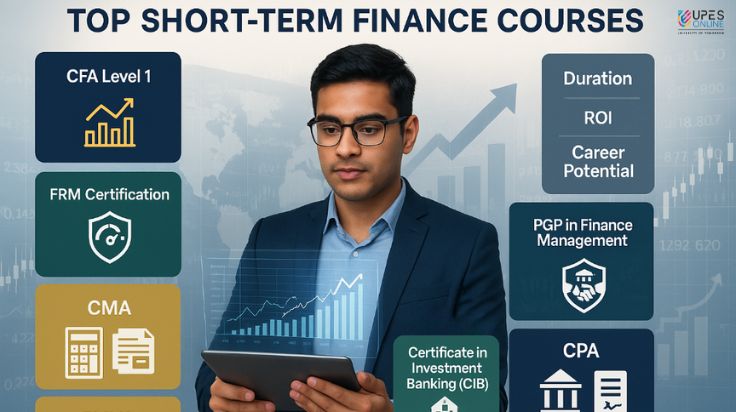
Short Term Certification Courses in Finance in 2026
Explore top short-term finance certification courses in 2026. Gain in-demand skills in investment, fintech, & analytics to accelerate your finance career!
Read BlogDeepSeek Vs ChatGPT: Key Differences & Similarities in All Aspects
DeepSeek vs ChatGPT—Which AI is better? Explore key features, differences, strengths, cost, & best use cases for your needs! 🚀
Read BlogHow to Balance Work, Life, and an Online Degree Successfully
Struggling to balance work, life & an online degree? Discover expert tips to manage time, stay productive & succeed in your career and studies. Read now!
Read BlogCEO vs COO: Key Differences, Roles & Salaries
Learn key differences between CEO & COO roles, their responsibilities, skills needed, salary trends to plan your leadership path.
Read BlogTop Asked Financial Controller Interview Questions
A list of the most frequently asked financial controller interview questions to help you stand out. From technical accounting expertise to leadership skills.
Read BlogShort Term Certification Courses in Finance in 2026
Explore top short-term finance certification courses in 2026. Gain in-demand skills in investment, fintech, & analytics to accelerate your finance career!
Read BlogDeepSeek Vs ChatGPT: Key Differences & Similarities in All Aspects
DeepSeek vs ChatGPT—Which AI is better? Explore key features, differences, strengths, cost, & best use cases for your needs! 🚀
Read Blog