Courses
MBA
MCA
BBA
BCA
B.Com
Certifications
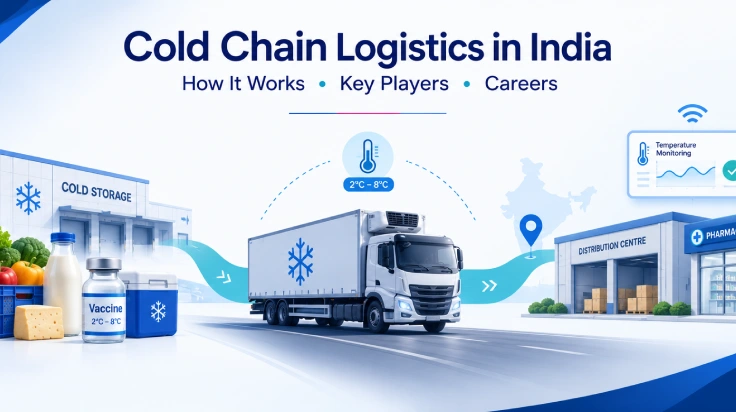
If you’ve ever ordered ice cream that arrived half-melted or a medicine that must stay cold—your first real lesson in cold chain logistics has already happened. Cold chain failures don’t just create inconvenience; they can waste food, spoil high-value pharma products, and break compliance in healthcare supply chains. India’s focus on integrated cold chain infrastructure (from farm-gate to retail) is also visible in government schemes and updated operational guidelines under MoFPI.
Read this blog till the end to know what cold chain logistics is, how it works in India, who are the leading giants, which program and, what career opportunities awaits those interested.
Cold chain logistics (cold chain logistics meaning) refers to the end-to-end storage + transportation + handling of temperature-sensitive goods under controlled conditions—so product quality, safety, and efficacy remain intact from origin to consumption. It uses temperature-controlled facilities, reefer transport, packaging, monitoring, and documented SOPs to prevent temperature excursions and contamination risks.
| Aspect | Cold Chain Logistics |
|---|---|
| Purpose | Preserve temperature-sensitive goods |
| Industries | Food, Pharma, Dairy, Agriculture |
| Transport | Reefer trucks & containers |
| Storage | Cold rooms & multi-temp warehouses |
| Technologies | IoT, Sensors, RFID, GPS |
| Careers | Operations, QA, Supply Chain, Planning |
Cold chain is a “system of systems.” If you’re describing it professionally, break it into infrastructure + mobility + monitoring + process control:
When students hear “cold chain logistics services,” they often imagine only storage and reefer transport. Operators sell bundles:
Cold chain in India is no longer a “nice to have” add-on—it’s becoming a core enabler for processed foods, dairy, seafood, quick-commerce, and temperature-sensitive pharma. That said, market sizing is messy: different reports define the market differently (only cold storage vs end-to-end logistics vs value-added services), so estimates can vary widely.
“India’s cold chain market is growing because demand is rising and tolerance for quality loss is shrinking—especially in pharma, vaccines, dairy, frozen foods, and quick-commerce.”
Think of cold chain as a series of controlled handoffs. Your product is safe only if every link is controlled—because one weak link can undo six strong ones.
For fresh produce, seafood, dairy, and meat, the earliest stage is often where the biggest quality loss begins. MoFPI’s cold chain scheme explicitly includes farm-level facilities like pre-cooling and primary processing steps (sorting/grading, packing) to reduce spoilage early.
A packhouse isn’t just a shed with fans. It’s where product is:
A modern cold chain uses zones (chilled vs frozen vs controlled room temperature), often in the same site. The “right” setpoint depends on product specs and regulations.
Reefer trucks, reefer containers, and insulated vans move product between hubs. The operational challenge is not “having a reefer,” but controlling:
Urban heat, short delivery windows, and multiple stops make last-mile cold chain fragile. That’s where insulated packaging, route optimization, and real-time alerts matter most.
You don’t need to memorize every standard—but you should know the common bands used in food and pharma conversations:
Practical takeaway: a “cold chain job” in pharma often rewards audit readiness and process control; food cold chain often rewards throughput discipline + cost control + quality consistency.
Listed below are the leading cold chain logistics companies functioning in India.
If your goal is placement prep, the smarter move is to shortlist by vertical + city, then verify temperature ranges, certifications, and hiring roles on the company career pages.
There are different set of software tools used for different use cases in cold chain logistics.
| For Warehouse | For Transportation | For Monitoring | For Analytics |
|---|---|---|---|
|
|
|
|
You’ll see “cold chain jobs” under logistics, pharma supply chain, warehouse operations, quality/compliance, and analytics.
Salary signals (India): Salary ranges vary sharply by city and company type but pay benchmarks for broader supply chain roles can be referenced from job-market datasets.
Salary reality (India):
Based on publicly reported salary data from Glassdoor and PayScale (accessed July 2026), entry-level roles (ops exec/transport coordinator/supply chain analyst) commonly fall around ₹3–7 LPA, depending on city and employer. Mid-level roles (supervisor, warehouse/fleet/logistics manager) typically land in the ₹6–14 LPA band. Senior roles (program management, pharma QA/quality leadership, network/strategy) often move into ₹13–25+ LPA and can go higher in large MNCs or high-compliance pharma setups. (Sources: Glassdoor and PayScale)
Some certifications to upskill that can provide better growth opportunities in the cold chain logistics industry:
Use this quick If…then… guide:
| Cold chain KPI | What it measures | Why it matters | Common tools/outputs |
|---|---|---|---|
| Temperature excursion rate | % shipments/storage cycles with breaches | Direct proxy for product loss + compliance risk | Sensor dashboards, excursion reports |
| OTIF (On-Time In-Full) | Delivery reliability | Customer trust + penalties | TMS reports, customer scorecards |
| Dwell time at dock | Time product sits during loading/unloading | Door-open time = temperature drift | Dock SOPs, time stamps |
| Asset utilization | Warehouse/vehicle capacity usage | Cost per unit moved | WMS/TMS capacity reports |
| Energy intensity | kWh per pallet/tonne stored/moved | Major cost driver for cold storage | Utility analytics, EMS |
| Shrink/spoilage rate | % product wasted | Bottom-line impact | QA logs, inventory reconciliation |
For context on why infrastructure and process matter: NCCD’s national cold chain assessment highlights infrastructure gaps (cold storage + refrigerated transport requirements), which is why efficiency and utilization metrics matter in India.
Students often oversimplify cold chain and that’s where mistakes start: cold chain isn’t just cold storage, it’s the full journey of controlled handoffs backed by monitoring and SOPs. Many also ignore the dock, even though most temperature drift happens during loading/unloading—so door-open time, staging rules, and dwell-time tracking matter as much as having a reefer.
Another common error is treating temperature like a single number instead of a range with allowable excursions, where the real risk depends on how far and how long conditions deviate (2–8 vs 15–25 vs frozen).
Finally, students equate “tracking” with GPS, but cold chain tracking means temperature traceability—sensor/logger records, alerts, excursion reports, and clear deviation handling—because location visibility alone doesn’t prove product integrity.
Cold chain problems in India are rarely “one big failure.” They’re usually a chain of small misses:
When people say “cold chain logistics solutions,” they usually mean a bundle of four things:
Public health is a good example of digitization: India’s eVIN system is described as a smartphone + cloud-based platform that digitizes vaccine stock and temperature information across cold chain points, implemented under MoHFW with partners like UNDP.
These are the trends worth adding because they connect directly to hiring, investments, and “future of the industry” questions:
If you’re researching healthcare cold chain logistics market across countries, you’ll find that most numbers come from paid research estimates, and they vary by methodology. One set of estimates suggests:
Cold chain logistics is one of India's fastest-evolving supply chain segments, supporting food security, pharmaceutical distribution, healthcare, agriculture, retail, and e-commerce. As businesses invest in digitization, automation, sustainability, and compliance, professionals with expertise in logistics planning, cold storage operations, quality assurance, and analytics will remain in high demand.
1) What is cold chain logistics in simple words?
2) What are the top 10 cold chain logistics companies in India?
3) What is reefer transport?
4) What temperature is standard for vaccine cold chain?
5) What’s different about pharma cold chain?
6) Are there careers in cold chain for non-engineers?
7) How do I get my first cold chain internship?
8) Is cold chain only about food?
Editorial Note: This guide references publicly available guidance and reports from the Ministry of Food Processing Industries (MoFPI), National Centre for Cold-chain Development (NCCD), India Cooling Action Plan (ICAP), CDSCO, WHO, and other authoritative logistics and healthcare sources. Market estimates vary by methodology and should be interpreted as directional.!!
PG Certification Program in Logistics and Supply Chain Management
View Program

Choose the best online MBA programs at UPES Online. Learn about specializations, career scope, & why professionals choose UPES for flexible learning.
Read MoreOct 15, 2025 I 6 mins
General MBA vs specialized MBA compared on metrics like scope, ROI, salary & career growth in India. Understand the path & choose wisely.
Read MoreMay 3, 2026 I 8 mins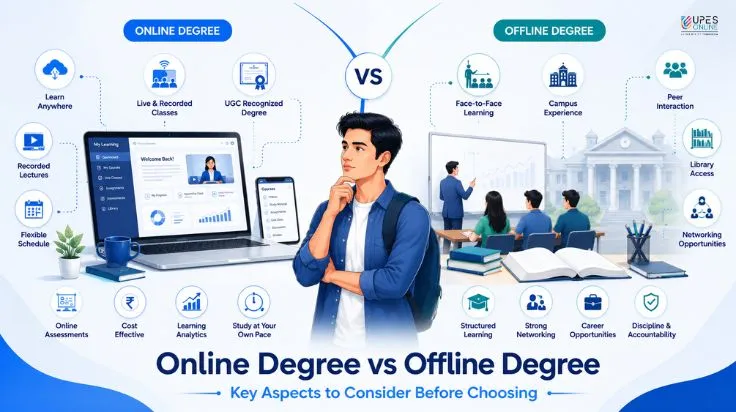
Compare online degree vs offline degree based on flexibility, costs, career opportunities, recognition, & learning experience to choose the right program.
Read MoreJul 10, 2026 I 9 mins
Explore online B.Com scope in 2026, including benefits, career options, salaries, industries, higher studies and whether an online B.Com degree is worth it.
Read MoreJul 31, 2026 I 11 mins
Explore a detailed guide on MBA for working professionals including eligibility, fees, online MBA options, top specializations, career scope & how to apply.
Read MoreAug 15, 2026 I 13 mins
Find out whether an Online MCA is worth it in 2026. Explore eligibility, fees, specializations, colleges, career scope, salaries and UGC validity.
Read MoreAug 29, 2026 I 11 mins
Find out if online MBA for engineers is a good choice; explore top specializations and career scope.
Read MoreSep 8, 2026 I 11 mins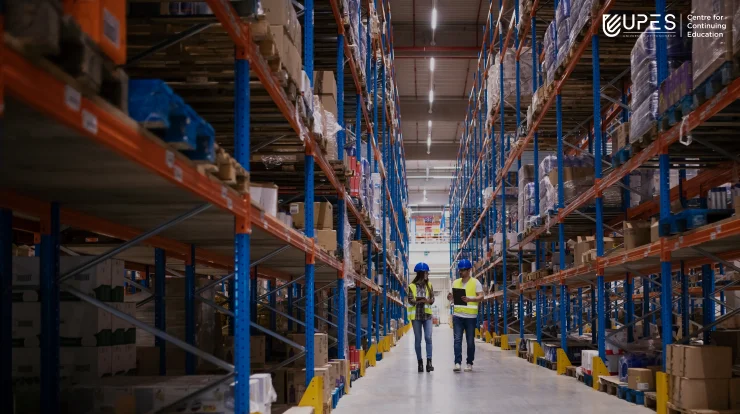
Shipping, order picking and storing along with logistics and learning WMS make for a good warehouse management system.
Read Blog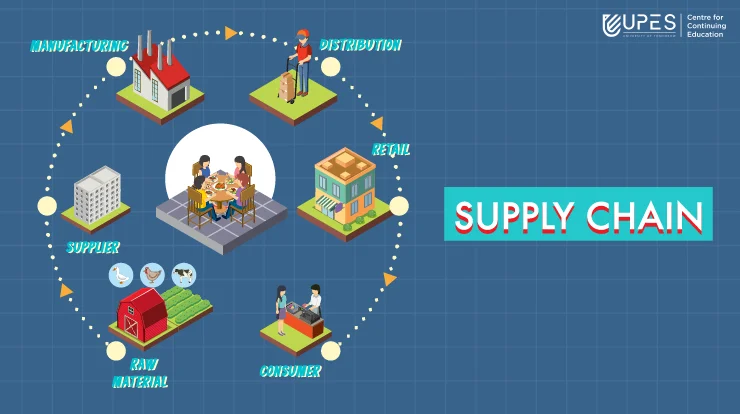
Transportation management in any industry can be made efficient using software for AI, various transport management systems for the smooth functioning.
Read Blog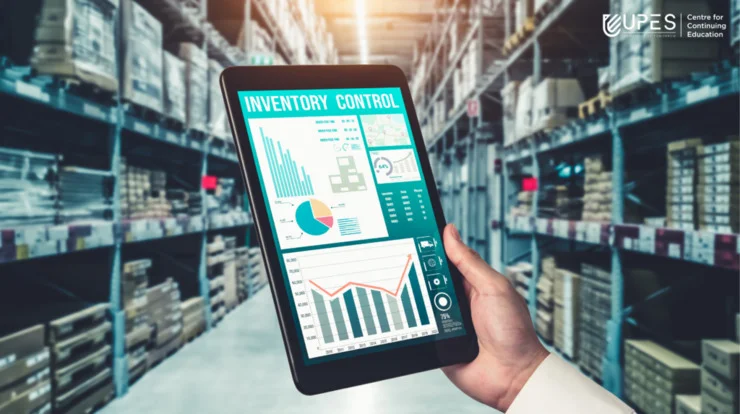
Learn the importance of inventory management in supply chain by knowing types of inventory & essential aspects in the inventory management process.
Read BlogShipping, order picking and storing along with logistics and learning WMS make for a good warehouse management system.
Read BlogTransportation management in any industry can be made efficient using software for AI, various transport management systems for the smooth functioning.
Read BlogLearn the importance of inventory management in supply chain by knowing types of inventory & essential aspects in the inventory management process.
Read BlogShipping, order picking and storing along with logistics and learning WMS make for a good warehouse management system.
Read Blog